Showing posts with label Personal Finance. Show all posts

Monday, 26 January 2015

Portfolio Analysis - January 2015

It sure has been a long time since my last post on Portfolio Analysis. Have been super busy, just couldn't find the time to write this stuff down, among other things :P

Frankly speaking, I have been putting off writing this post for a while since I was re-structuring my portfolio a bit. So, in this analysis, you'll find that I have a sizeable amount of funds that are in cash, which is quite unlike me. I also obtained control over my dad's portfolio and that is no easy work to handle - quite a bit of restructuring required in his portfolio and that's kept be a bit occupied.

Well, let's start off with the portfolio analysis and then move on to the equities section.


Figure 1: Portfolio Allocation


  • The PFs continue to decline, as expected and desired. At this point of time, there is no need to invest heavily into PFs. Considering the equity market conditions (mostly bullish with the prospect of a another collapse in the future), a buffer amount needs to be maintained in PFs while being ready to exit the equity markets at the first sign of a collapse.
  • The Real Estate property continues to be paid for on a monthly basis, this will increase gradually and there is no rush to pay off the house loan at present. On another note, the market rate of the property is about 20% above its buy price, about 20 months since purchase. This was the case a couple of months back and I am quite glad with the progress so far.
  • Equity allocation continues to increase at a decent rate. I'd like to be invested more in this but the markets seem to be quite overvalued at present. The global and Indian economies aren't faring as good as one would like and that is increasing the risk associated with this investment at this point of time. Having seen the worst of one recession, would like to take appropriate precautions if another one occurs :)
  • Savings have reduced slightly since I deployed some funds to equities. Well, that's what they are for, so no harm done. Will increase this gradually and deploy appropriately when sufficiently accumulated.
In my previous posts, I had placed RE under the Risk Free category and that seems wrong to me. Regardless of how sure one is, Real Estate investments are not risk free. There is always a possibility of that investment value reducing. So, I have moved it to the Low Risk category. Although it is comforting to see such a huge portion of the investment in Risk Free, I'd like to increase the High Risk component so that the percentage allocation changes. At a young age, one should take advantage of the High Risk investments to generate higher returns. The Risk Free investment options should ideally be used once one is riddled with responsibilities or has to retire.

Moving on, let's take a look at the Equity portfolio now.


Figure 2: Equity Portfolio


There have been quite a few changes this time around and a few more to come. It is the quarterly results season and I have been deciding on some of the stocks in my portfolio with regards to the same, as well as future prospects. Besides, the budget for this year will be announced soon and that will be another key indicator to look forward to, from equity selection perspective.

  • Ashok Leyland, an automotive company, is one of the star performers at the moment. I believe this stock has yet to unlock its value and I expect this to be in my portfolio as long as good market conditions prevail.
  • Fluidomat is a recent acquisition. I don't really have much to mention on this one. If the engineering/manufacturing sector does well and the government comes up with the much needed reforms, this stock will do well.
  • Firstsource Solutions had a very nice run-up and I exited at its peak. Since then, it has corrected a lot and is quite close to my buy price. I have purchased this again, but on my dad's portfolio.
  • Gabriel, the stock that has more than doubled since my purchase, is an auto ancillaries company and its performance is tied to the market conditions/auto sector companies.
  • Gayatri Projects, a construction company based in Andhra Pradesh and executing projects in that area, has been stagnant for quite some time. Hence, I reduced exposure to this stock to make other purchases. When it shows signs of life again, will increase exposure.
  • ITC, a tobacco company, that has been trying to diversify for quite some time now, by funding its loss making ventures using the profits from its cigarette business, has been hurting the shareholder wealth considerably. Hence, I have sold this stock. With the government's anti-tobacco stand, its prospects don't look too good in the future, unless it gets its act together.
  • Larsen and Toubro, probably the largest engineering company in the country, has started moving up again. Its performance is directly tied to the performance of the economy. A boost in the engineering sector and some reforms would propel this stock immensely.
  • Reliance Industries, I bought this just before the oil price dropped from $100 to $50. That has really hurt this stock. But I am at present unable to exit it for two reasons. I believe the oil prices are unnaturally low and will have to come up. The stock should rise up again when that happens. Also, the unlocking of the value of its telecom company, Reliance Jio should offer good returns as well. Only time will tell.
  • SBI, largest public sector bank in the country, has been doing well since it started fixing its NPA since 2 years ago. Hopefully, if it continues on the same path, it will be a real money maker.
  • Selan, another oil company, primarily focusing on exploration, will do well once oil prices rebound.
  • Sun Pharma, a good stabilizer in the portfolio, is also performing quite well and has risen quite a bit since my purchase.
  • Zee Learn, wasn't doing well and hence I exited the stock with minor losses. A stock in the education sector is required but this one isn't up to it yet.
I still have some deployable funds and am waiting for the right opportunity to use those. Currently, the market is at an all-time high and it just doesn't feel like the right time to use up my funds. Besides, the situation all over the globe isn't all that rosy and a crisis can appear at any time.
The portfolio has out-performed the index as always, and by a significant margin too. Not factoring in the added funds, there is a stark difference of 7% above the index returns.


Sunday, 14 September 2014

Portfolio Analysis - September 2014

Well folks, it's now time for the September Portfolio Analysis. For those of you who may have missed the other Portfolio Analysis posts, these are the April and July posts.

So, let's get our hands dirty with numbers immediately.


Figure 1: Portfolio Asset Allocation


  • The PFs continue to decline as I am unable to add funds to this asset. This should get resolved around December as I pump funds into my PPF account for Tax Savings.
  • Nothing noteworthy to comment on the RE asset as this will continue to increase at a pre-defined rate, based on the Amortization of the House Loan.
  • The equity markets have been acting strangely these last couple of months. Subsequent to the last post, the markets underwent a substantial correction and have just rebounded back to reach a new all-time high. I haven't been able to make noteworthy contribution of funds here either, since I had some high value expenses recently, in the form of books, travel expenses and life insurance premium payment.
  • Savings continue to remain at a desirable level, I expect I currently have 4 months of expenses covered.
  • Not much of a change with deposits either, this just contains one RD which adds a minuscule amount automatically every month. I call it my "Rainy Day" account. :D
  • Analysis - The portfolio allocations are looking good, on target in my opinion. The risk-reward ratio matches investor preferences and suitability criteria too. Although, it would be a good idea to reduce the Risk Free component and allocate those funds, mostly to Low Risk and partially to High Risk components. That would really balance the asset allocations out and make it an ideal portfolio. However, currently the Low Risk component aren't presenting a substantial returns advantage over the Risk Free component, and hence it will be a while before this change can be achieved.


Figure 2: Equity Portfolio


We have had a few roller-coaster months in the markets, mostly due to the global pandemonium due to the crises in Iraq and Ukraine, as well as some hiccups due to European economy. Looks like things are settling down again, at least as far as the markets are concerned. The domestic markets made a recovery over the last couple of months and hopefully the trend will continue.

  • Waiting on FSL and ZEELEARN to shoot up. Both the stocks are in the Technology sector and are generally driven by good quarterly results. ZEELEARN gave me a scare when it dropped 20% from my initial buy price, but I averaged it out gradually and it has recovered substantially following the last AGM.
  • GABRIEL has done phenomenally well, it is currently fetching me 100% returns. The auto sector stocks zoomed up recently and this one benefited from the euphoria. It is an auto ancillaries stock. Although, seeing such a fantastic response in this sector makes me wonder why I skipped on picking TVS Motors when I had the chance :(
  • GAYAPROJ is not a stock for the faint of heart. It dove to unnatural levels and has now returned back to my purchase price. Although I'm confident about the stock over the long term, I am considering reducing exposure to the stock. I will have to give some serious thought to this though. Just so you know, it was down 30% from my buy price and has since recovered. I know you are thinking why I was holding on to the stock and waiting for it to drop by 30%, but it's very hard to maintain stop-loss levels on this stock as it highly volatile. Besides, it has tremendous potential for growth.
  • ITC is a defensive, I am not really bothered whether it moves much or not. It's meant to provide stability to my portfolio. Same goes with SUNPHARMA, however that recently spiked up due to great results and is now nearly 40% up from its purchase price. Feels great to see a defensive stock contribute so much to your portfolio :)
  • L&T, RELIANCE and SBIN are all growth stocks, large-caps, meant to be held for long term again. They are primarily result driven and have been performing well. There is a lot of potential for L&T if the construction and manufacturing sectors in India pick up under the new Government. RELIANCE is a slightly longer term pay-off as it is expected to reap rewards 2 years from now, when it starts receiving returns on the investments it has made over the last few years.
  • Analysis - Well, the portfolio continues to outperform the NIFTY index, although the performance was hampered this time around by GAYAPROJ. The risk allocations look good too, I don't think I'd want to change anything there.

Sunday, 20 July 2014

Portfolio Analysis - July 2014

I started the Portfolio Analysis series with the April post. Looks like I can find time for quarterly reports in this series. I was trying for a report every two months, but just couldn't make that happen in June. Let's see how I can take this going forward.
For now, let's analyse the Portfolio status in July, how close I am to meeting the targets, what kind of changes need to be done etc.

Before I continue, I would like to point out that compared to the April post, there is a slight change in approaching the Current Value for Real Estate Holdings (RE), namely Property Investments. Instead of basing it on cost value, it will henceforth be based on the principal value of the loan paid back to the lender (note that it's just the principal component, not the interest component). I have adjusted the April portfolio as well in this regard.

Figure 1: Portfolio Asset allocation 


  • There is a marginal drop in the PFs section and will continue to be so for a few more months since I don't plan on investing here until the end of year, for tax purposes. Although there are monthly EPF contributions, their value isn't enough to keep up with the investments in other investment vehicles.
  • To prevent skewing of the portfolio towards Real Estate, here on out, RE Investments will be considered as per the contribution towards the Principal Component of the loan. If you have any queries here, I will be writing a post soon on home loan payment system. If you feel this approach is incorrect, please leave a comment below :)
  • As I had mentioned, at this stage of life, I can afford High Risk investments and should in fact prefer it. This is reflected in the Equity component as well. The fact that the equity markets are expected to be bullish on a medium-long term basis, this strategy should fit well. However, I do feel that the current allocation of 40% to equity is sufficient, maybe I'll keep it between 40-50% so I have some margin to work with.
  • My savings earlier were meagre at best, meeting only 1 month's expenses. As mentioned in my post on being financially sexy, it is essential to have funds available for 3-6 month's expenses, to account for any unforeseen circumstances. As of today, I am close to having 3 month's expenses covered in my Savings account, maybe a quarter or two more to cover for 6 month's expenses.
  • One of my deposits matured in the first week of June and I used those funds for the Savings and Equity allocations. The interest rates for deposits are too low to consider this as a good investment asset. I, however, prefer to use this as an emergency fund, in case my Savings account falls short. Besides, it prevents me from making unnecessary expenditures (resist that temptation to buy something when find your bank balance so high!).
  • There is a net change of +15.66% in the total asset value of my portfolio. This is not indicative of growth since there is a continuous influx of funds, but doesn't hurt to know.
  • Analysis - I think, from risk perspective, the portfolio is in a favourable position. I would have preferred the Low Risk allocation to be about the same as the Risk Free allocation, but I don't think that'll happen. Firstly, the returns on deposits (low risk) are only marginally higher than those on PFs (about 1% difference). Secondly, the added benefits of investing in PFs far outweigh the investment in short-term deposits for the incremental 1% returns. The PF benefits will be covered in other post (work in progress) as well.


Figure 2: Equity Portfolio


The above investments are in the Indian Equity Market, NSE. Since my last post, the Government has changed and the Union Budget for the country was announced recently, hence my portfolio underwent several changes to make the most of these opportunities.
Primary focus of the budget was education, rural development and infrastructure growth (as far as I remember). So, the changes in my portfolio are meant to target these opportunities for optimizing the portfolio growth and value. To do this, I have added a few midcap stocks for increasing growth prospects and increased allocation in a largecap stock for maintaining portfolio stability while still targeting the budget opportunity.

  • ENGINEERSIN, FSL, GABRIEL, GAYAPROJ, ZEELEARN are all budget picks for medium to long term. ENGINEERSIN will probably be removed soon, to increase allocation in other stocks. It's currently sitting at a 10% profit, I intend to wait for another 10-15% increase before exiting that counter.
  • HCLTECH was removed since I hold FSL (same industry, IT) and it was proving to be a better buy. The sale proceeds would be of better use in sectors benefiting from the budget.
  • There is a substantial increase in L&T - this is the largecap I was referring to that would benefit hugely from the budget.
  • Marginal decrease in ITC (tobacco industry) due to budget risks and SUNPHARMA, but the long term growth is still intact. Besides, they provide much needed stability to an otherwise volatile portfolio.
  • RELIANCE is a fresh buy and it is a very long term pick. The company has been making investments for the past 2 years and returns on these investments are expected a year or two from now. As we all know, stock prices react to future events in advance and I don't want to miss that ride :). Besides, this is a great stock to have in a portfolio, diversified company in some ways but primarily based in the Oil and Refineries industry. I intend to increase allocation here over time, buy on dips sort of strategy.
  • I did add quite a lot of funds to make sure I didn't miss the bull run. Hence the high value for Newly Added Funds.
  • Analysis - Portfolio Value change in 3 months is about 47%, which includes the 15% funds added. So, were we to discount that, there is an increase of almost 30% in the portfolio value in one quarter. During this time, the index (NIFTY) rose by 12%. I would say that the portfolio has done quite well in this regard. The risk is paying off :)
  • Risk and Growth stocks are almost evenly allocated at around 40% with Defensives at 20%. Just from the portfolio perspective, this may look very risky, but if you take the entire portfolio into consideration (non-equity investments as well), this doesn't seem so bad. The role of the equity portfolio here is to provide as high a return as possible, so this would entail higher risks. This is possible because of high asset allocation for Risk Free investments (47%).

Well, the portfolio seems to be doing well, and gradually I am getting closer to the target portfolio. I reiterate, it helps to chart down your portfolio holdings in order to create an optimal portfolio.

Sunday, 13 April 2014

Portfolio Analysis - April 2014

It is extremely important to have the ideal portfolio, one that matches the risk-reward ratio appropriately. This matching would be dependent on your age, your ability and preference to bear risks, risk or reward probabilities for other investments etc.
One's portfolio should have a proper balance between risk-free investments, low-risk/low-return and high-risk/high-return investments. This balance will naturally change over time. As one ages and approaches the retirement age, the portfolio will move from high-risk towards low-risk.

In this regard, I intend to periodically(most likely on a quarterly basis) record my portfolio standing. This will help me out in several ways:

  1. Identify the risk-reward balance for the portfolio at a given point in time and modify it accordingly.
  2. Identify the portion of savings allocated to the different investment types and correct that allocation over time.
  3. Monitor the growth of the investments over time and restructure if needed.

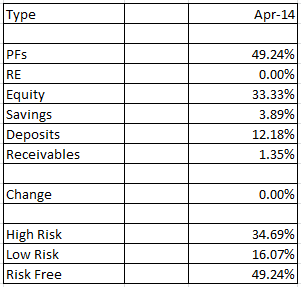
Figure 1: Asset allocation including Real Estate(RE) investment through loan


I purchased a flat at a very early stage of life(I'm nearly 24 years old) and this has skewed my portfolio heavily towards that investment. I have provided an asset allocation excluding the RE investment as well, but that's below. Let's take a look at this one first.
  • The High Risk investment comprises of the Equity and Receivables(money lent to others) components.
  • The Low Risk investment comprises of the balance in the Savings bank account as well as the Deposits(a few Recurring Deposits(RDs)).
  • The Risk Free investment comprises of the RE and PF(PPF and EPF contributions) components.
  • Change is currently recorded as 0. This value will get updated when the next period's analysis is done.
  • Analysis - As is obvious, considering the age factor and the ability to bear risk, the High Risk component is much lower than it should be. I feel that it should at least have 60% allocation of total investments. The remaining 40% can be divided between Low Risk and Risk Free investments. That said, I don't think that may be possible(certainly not in the near future) due to the heavy contribution from RE.

Figure 2: Asset allocation excluding Real Estate(RE) investment


Now, let's take a look at the asset allocation if we exclude the RE investment.

  • Analysis - The Low Risk and Risk Free components together account for about 65% of the total portfolio assets. This kind of a distribution is suitable for someone around the age of 50! In spite of removing RE from the calculation, the charts show that the portfolio is not designed as it should be.
  • The low allocation in High Risk is not because I can't handle the risk, it's because the portfolio is not designed correctly. It requires restructuring to amplify potential returns(at the cost of increased risk, which I can bear).
  • Since Equity is the only High Risk favourable investment(hate the idea of Receivables increasing) and the PF contribution is already quite high, every opportunity I get to deploy surplus funds should be two purposes - Savings(to meet Emergency Fund requirements, more on that here) and Equity(increasing potential returns). Another challenge is that, every month, a fixed amount from my income is earmarked for PF(EPF) by the company, so I'd have to trump that amount to alter the current portfolio allocation - no easy task considering the EMI I pay for the RE.


Figure 3: Equity Portfolio


Since Equity investment is a critical component of my future investments aimed towards obtaining a well-structured portfolio, I felt it would be a good idea to monitor the Equity Portfolio as well and tailor it to meet my requirements.

  • The Defensives include SUNPHARMA and ITC.
  • Risky bets includes FSL and GAYAPROJ.
  • Growth includes HCLTECH, L&T and SBIN.
  • NIFTY is the EOD index value (for Nifty) against which we will compare the portfolio. We will also record the equity net worth change over time.
  • Newly Added funds refers to the funds added between the two periods that we compare the portfolio. Deployable funds refers to the funds that is earmarked for equity investment but is currently held in cash with the brokerage firm.
  • Analysis - As I see it, Defensives allocation is quite high. Any funds that need to be deployed ahead should be put in Growth or Risky bets. I feel that not more than 20% of the portfolio should be held in Risky bets(I've often had ill luck with these). Besides if the Growth stocks net substantial returns, then there won't be a need to over-expose the portfolio to the Risky bets.
  • Strictly speaking, I am a long-term investor and seldom do I attempt short-term trades to book quick profits. So I anticipate we'll see low returns in the near future, but over a period of time, the returns should be decent enough(if fortune favours me). However, that is for the future, let's just see how things move from here.
  • I don't like to hold portfolios with a lot of stocks since they don't really help with risk reduction through diversification beyond a certain point. I am not saying I know what that magic number is, but I tend to draw the line at 6 to 8 stocks, considering that the absolute amounts I am investing are not very high. Guess I'll just have to learn with time and find this magic number out myself.

Well, it is obvious that this portfolio needs a lot of work! Until I started this exercise, I never imagined that my portfolio would be so biased towards Low-Risk investments. I probably knew it, but just didn't want to accept it. Charting the portfolio and writing this down definitely helped. I suggest everyone should maintain a track record of their investments to ensure that the portfolio is structured the way it is meant to be(or required to be) structured.

Do let me know your thoughts and suggestions.

Are you Financially Sexy?

I came across this post which spoke about being "Financially Sexy" and immediately liked it. Thought I'd share the gist with you guys, while adding my opinions to it.

It's not that someone who earns a lot or has a lot of luxuries at his disposal is financially sexy, as the myth is, because we all know the numerous rich people who have applied for bankruptcy, or gambled away their riches. So what is financial sexiness and how do you achieve it? Well, there are certain criteria that you have to meet in order to become financially sexy.

  • High Credit Score
It is vital that you have a very high credit score, preferably more than 85% of the maximum score. If the score is calculated up to a scale of 1000, your score should be above 850. With a high score, not only is it easier to get a loan, but you get them at lower interest rates too.
I haven't run my score yet, gotta put it on the agenda and get it done as well.
  • Savings >= 15% of  Gross Income
This is a critical measure that very few people realise. The general tendency is to consume during the month and the leftovers are the savings. I prefer to set aside 15% of the income at the start of the month and the remaining can be made available for consumption. If there are leftover funds at the end of the month, they can be added to the savings as well. This is especially essential since the American consumerism has spread all over the world and credit cards have became a necessity for some, rather than a convenience. The next measure highlights this as well.
I generally save about 15% of my income every month, unless some unexpected large expenses come by. But I'd like to save some more, and increase my investment pool now.
  • Credit card utilization at 35%
People tend to utilize the entire credit limit that is available to them, which is a risky proposition and would be avoided by a financially sexy person. One should try to utilize not more than 50% of the credit card limit, and a financially sexy person would limit this to 35%. This not only reduces the risk on the credit, but also boosts the credit score.
Fortunately, I don't have a credit card. But I don't see myself exceeding the 35% threshold even if I do get one in the future.
  • Healthy Emergency Fund
I strongly suggest that one should have at least 3 months of living expenses worth of liquid funds stashed aside for emergencies. I am aiming at 6 months of living expenses to cover me, because you never know how the tables might turn on your fortune. The simplest example that comes to mind is the recession of 2008.
I did have a good fund until a few months back which unfortunately got used up to meet some investment needs. That was wrong on my part and I am already working on getting that fixed. I have about a month's worth of savings in emergency funds, which I'll increase to six months at the earliest and hold it there.
  • Debt to income of 35% or less
This ratio represents the amount of debt you owe to the amount of income you earn on a monthly basis. The 35% figure is sufficient to give you some flexibility with your future choices, should you opt for anything different. But a lower ratio would certainly be preferable. The lower ratio also provides the added benefit of obtaining additional loans with comparable ease.
I do have a pretty high debt, about 50% of my income, in the form of home loans. Over a year or two, hopefully, I will be able to bring it down to 35%.
  • Portfolio with appropriate risk-reward relationship
This is a pretty debatable topic because it depends on individual financial conditions. What I am trying to put across here is that you should not only be comfortable with your portfolio allocation, but should also be right about it. For example, a person aged 60 should not have a greater chunk of his portfolio in high risk investments - on account of his retirement, he should preferably have a steady source of income from pension accounts, or rental incomes or any other source of steady income that is not susceptible to drastic losses unexpectedly. More on portfolio allocation in a future post.

So, what do you think? Are you financially sexy or will you have to make some changes to fix up your financial situation? Do you think there are any additional criteria that should be considered here?


Wednesday, 8 May 2013

A Primer to Life Insurance Policies


A myriad of insurance schemes have hit the markets over the last decade, most of which aren't exactly insurance. Over the last decade, insurance has become more of an investment avenue than what it was meant to be, all the ULIP schemes and pension like schemes bear testimony to the statement. Of course, each has its merits and demerits and I shall attempt to list these down to facilitate your decision making or draw suggestions from you. There is quite a variety of schemes out there, and I shall list some of the most popular ones:

1. Term Insurance Plan.
This is the vanilla insurance scheme, which provides cover for your life(and whatever riders you attach to your plan) by funding your dependants. In case you do not die(or any of the rider clauses aren't met) over the tenure for which you are insured, you do not receive any money. If you are going for one of these, try to get the online schemes from reputed firms since the premiums are lesser. Check the claims ratio for the firm as well, higher the better.

Advantages:
Separates investment from insurance, gives clarity to your goals.
Huge cover for small premium amounts(compared to other options).

Disadvantages:
Provides zero return if policy holder survives(or rider clauses not met).


2. ULIP - Unit Linked Insurance Plan
This is more like a mutual fund with the benefit of insurance plan(hence tax benefit) attached to it. The insurance cover is negligible and the fund management fees are astounding during the first year. The premiums paid go towards the fund management fees and the investment in the market. The portfolio breakup for the fund corpus is generally declared in the document(of course, with the clause that it is subject to change). There is generally a lock-in period associated with these schemes as well. Also, there is often a clause of bonus returns, wherein, in case of good fund performance, the policy holder is rewarded with better returns on the investment.

Advantages:
Possibility of better returns exists.
Provides tax benefits on investments in the equity markets.
Funds can be liquidated partially(read terms and conditions for this)

Disadvantages:
Risk bearing investment, susceptible to losses
Very low insurance cover, can't really be called a good insurance scheme.

3. Pension/Retirement Insurance Plan
This generally requires you to pay premiums until your retirement age(or an age of your preference, as long as it falls within their predefined age limits), and post retirement(or that age) you get regular income(fixed value or it may increase at a predefined interest rate) from the company. In case of death prior to all the premium payments, your family will receive the regular income from the company. This scheme can be used as mentioned above, or it can be used to meet some future financial goals. One needs to do some hard calculations before opting for such schemes For example, if you are paying $10000 annually towards such a scheme for the next 12 years and you are to receive $20000 from the 13th year, compounded annually at 5% from the 13th year, it is up to you to evaluate and deduce whether $20000 will suffice for a year 10 years down the road(values taken are only for example scenario). Of course, this might work in countries with low inflation rates but it would be difficult otherwise.

Advantages:
Provides steady income along with insurance benefits.
Adequate calculations required at the time of premium selection for future planning.
Low risk investment.

Disadvantages:
Can fall prey to high inflation rates and low interest rates.
Generally yields low returns.


Honestly, in my opinion, it would be best to go for a Term Insurance Plan at a young age, when the premiums charged are low, and take it over the longest term possible. After a decade or so from the first Term Insurance policy, take another Term Insurance policy. This should seal the deal for your dependants I suppose. With the internet era, and the online schemes charging lower premiums, this should be a good option.
If you haven't accumulated wealth for retirement through other means, then you can go for the Pension Insurance Plan, about two decades or less prior to expected retirement age. By that time, you would be quite comfortable with your earnings and such an investment wouldn't probably hurt. I would, however, suggest that instead of going for the Pension Plan, you could just buy a flat or two, and rent them out. They would quite comfortably cover you for the month(of course, you'll have to plan the flat purchase well).
As hard as I try, I can't  find a valid justification for a ULIP. Even for an investor, a good mutual fund would be a better option than a ULIP. One might argue that the absence of capital gains tax for ULIP beats mutual funds, but one would have to calculate the tax against the fees paid to the ULIP fund manager. And as far as insurance goes, ULIP provides the worst cover. If you can think of a reason why ULIP is a good option, please do enlighten me.

Added a flowchart below to summarise everything above, hope it helps.