Showing posts with label Reading. Show all posts

Tuesday, 16 September 2014

Lightbringer saga by Brent Weeks

A friend brought my attention to this amazing series, Lightbringer, by Brent Weeks. It was originally intended to be a trilogy, but that didn't quite work out. So it's now a 4-book series. It is a fantasy-fiction novel with loads of strategy, action, magic, comedy and drama packed in. The series contains the following books:

  1. The Black Prism
  2. The Blinding Knife
  3. The Broken Eye
  4. The Blood Mirror

The Broken Eye was recently released, in August 2014, which leaves us with only the series finale book unpublished. Judging by the frequency with which the 3 books were launched, I suspect it will be a 2-year wait before the final book is out.

The Lightbringer series is quite well written with an appropriate mix of sarcasm, comedy, and strategy, slightly short on action and a tad extra bit of drama and magical history. The number of characters introduced in just right, no extra characters which suddenly drop off later in the book and no unnecessary introductions that seem to waste your reading time. Suffice to say, you won't stop unless you are done with all the books. Thinking it to be a trilogy, I read through the books at breakneck speeds, only to find that Brent Weeks will be launching another book to complete the story. Pretty harsh considering I have to wait 2 years to finish this series.
The humor is amazing - witty, wry, sarcastic, that is bound to make you laugh out while reading the books. The action is intense when it occurs, but I feel this is slightly rare for the sort of book it is. It's possible that we'll see quite a bit of it in the final book(fingers crossed). Brent's description of action scenarios are amazing and it's just a little disappointing to find so few of those in the 3 books. At times, I felt that he discussed details about the historical and theological aspects associated with the fantasy world, and although it's not bad, but it didn't align with the environment created in the book - he could have discussed some other aspects in my opinion. There are bits and pieces of drama packed in too and it is just in the right amount at the right stages of the book. This was deftly handled by him.

In the fantasy world created by Brent Weeks, some people, called drafters, can use light to perform magic (creating and using material called luxin). Since light has different spectral components, different types of luxin can be created and hence different sorts of magic pertaining to these colors. It is believed that this ability is provided by a God, called Orholam. From here on out, there are similarities with any other religion or its consequences. For example, since there can be different interpretations of a God's will, there will be multiple factions with varying faiths, which causes wars. You will find equivalents of Prophets, Seers, Popes etc. in the book too, except there's magic involved :). I'd say it's a great series to read and you'll find your time to be well spent.

I'll provide a book by description below. If you haven't read any of the books, you might want to avoid the section below. If you are returning to a book from the series after a long hiatus, you might want to take a look to jog your memory so you can proceed with the series. Needless to say, there will be SPOILERS below.

The Black Prism
The first book follows the story of Kip, the bastard son of the Prism Gavin Guile. His town is attacked by the King of his province, Garadul and he manages to escape, in the process discovering that he is a drafter. He is later found by the Prism Gavin(who is in fact Dazen Guile - the real Gavin Guile is held prisoner by Dazen in a cell under his apartment) and Karris White Oak, a member of the Blackguard, who take him to Chromeria. Here, he begins learning drafting under Liv(Aliviana Danavis). The attack on Kip's town signals an oncoming war and the Prism attempts to direct the Spectrum to head out to war before the enemy grows strong, but this plan fails. So, the Prism, along with Kip, Ironfist(Blackguard Commander) and Liv head out to defend the first city expected to be besieged by King Garadul. The Prism enlists the help of his friend from the False Prisms' war, General Corvan Danavis, to protect the city. With the help of other drafters, the Prism builds a wall made entirely out of luxin, around the city, but King Garadul and his army manage to breach the wall. When Kip learns that Karris is hostage to King Garadul, he heads out to infiltrate their camp and rescue her, in order to repay his father Gavin for his kindness. He is helped by Liv in this attempt. Although his attempt at infiltration fails, he is aided by Ironfist later to make his escape with Karris, however Liv gets caught and is held by the Color Prince(Koios White Oak, who was thought to be killed in a fire, at the hands of Dazen). The battle between King Garadul/Color Prince and the Prism continues at Garriston, leading to Garadul's death at the hands of Kip. However, the Prism loses due to the overwhelming power of the Color Prince and his drafters and they escape by sea, with an entire city's residents in tow. During this escape attempt, the Prism gets stabbed(by the Blinding Knife) for a brief moment by Zymun in the back and then Kip throws Zymun overboard. The book ends with Gavin breaking out of the blue prison and ending inside the green one, while Dazen loses the ability to draft blue. Karris figures out that Gavin is, in fact, Dazen.

The Blinding Knife
The Prism sends Kip with Ironfist to Chromeria to become a Blackguard, while he heads out to Seers Island to create an establishment for the refugees from Garriston. He speaks with the Seer on the island and heads out to search and destroy the blue bane(drafters/wights with great power over that color in a huge area around them). Meantime, Kip is in Chromeria, attending Blackguard classes and training. However, Gavin's father, Andross Guile(Red member of Spectrum) is judging Kip's potential and playing Nine Kings with him with stakes. Since Kip doesn't know the game, he ends up losing most of the times(in spite of studying the game in the library) until he meets a Mirror, Janus Borig, who teaches him about the game and the cards, their origins etc. Kip finds that the original cards made by the mirrors have memories and are powerful artifacts. Gavin returns, but has lost the green color(prisoner Gavin escapes green prison and ends up in yellow), and rallies the Spectrum for war. He kills his brother in the yellow prison and marries Karris. The green bane is forming at the next battle point, near Ru. The Color Prince captures Ru and sheds green light on the green bane. This strongly empowers them. The Prism and Ironfist form two groups, one to defeat the bane and other to capture the Ru fortress. The Prism, Karris and Kip attack the bane and manage to defeat it with Ironfist's team attacking it with cannon shells. Kip's use of the Blinding Knife removes the drafting ability of the wights and bane and thus helps them defeat it. When the teams return back to their ships, Kip realizes that Andross Guile is a wight and attacks him with the Knife during an argument between Andross and Gavin. He briefly stabs him, when a tussle starts between Andross, Kip, Gavin and Grinwoody, leading to Gavin getting stabbed with the Knife and falling overboard into the sea. Kip jumps in to rescue Gavin but they both get captured by Gunner. Gunner grabs the Knife(which looks like a musket-sword) and throws Kip overboard, only to be captured by Zymun(Kip's half-brother, Karris' son). Andross is no longer a wight but Gavin is totally color-blind.

The Broken Eye
Gavin is a slave on Gunner's ship and his job is to man the oars. After a long span of time on the oars, he is rescued by Antonius Malargos and taken to Eirene Malargos. He is held captive there and tortured by Eirene and the Nuqaba. The Knife is held by one of the oarmates who was freed during the rescue. Meantime, Kip escapes from Zymun and finds his way back to Chromeria, where he makes peace with Andross. White employs Karris to be her spy and relinquishes her of Blackguard title/duties. Kip trades information on Zymun with Andross in exchange for sending scouts out to look for Gavin and access to restricted libraries. A great deal of the book now focuses on Kip reading in the library with his squad(about Lightbringer, history, theology etc.), personal training with Karris and training in the Prism's practice room. The Order of the Broken Eye recruits Teia as a spy due to her paryl drafting abilities. She speaks to the White and becomes a double agent. The book deals with her exploits with the Order. During this time, Andross used Murder Sharp to cement his place at the Spectrum and becomes promachos. He also tries to get the Spectrum under his control, through murders, bribes etc. Marissia learns that Gavin is held prisoner by Eirene Malargos and heads out with Ironfist and few other Blackguards to rescue him. While Gavin is being blinded by the Nuqaba, Karris rescues him in a dramatic fashion but he has already lost one eye to a hot iron poker. Once they return to Chromeria, Karris heads back to the Spectrum meeting to find that White is dead, Zymun is Prism-elect and she participates in the ceremony to become the next White. Meantime, Zymun sets the Lightguard against Kip and his squad, who manage to escape with Tremblefist's help(who succumbs grievous injuries). Andross has a deal with Kip which requires him to marry Tisis Malargos and be his spy in their care, for which he will bring him back to Chromeria at a later time. Andross finds that the real Gavin was killed by Dazen and the Prism thus far has been Dazen. He captures Dazen and puts him in the blue color prison made by him. Grinwoody is found to be the head of the Order of the Black Eye and is acting as spy in Andross' household. Ironfist is a spy to Grinwoody and he reports that he believes Kip is the real Lightbringer.



Tuesday, 22 April 2014

Legal Novels you must read

Over a decade ago, I read an amazing legal novel, dealing with murder, mystery and court case. It was a huge book and I had a flight to catch at dawn, but I just couldn't bring myself to put down that book. I sat through the day, finished the book at 0300 and dressed up to catch that taxi!
Since then, I have managed to read only a handful of legal novels that I really enjoyed.
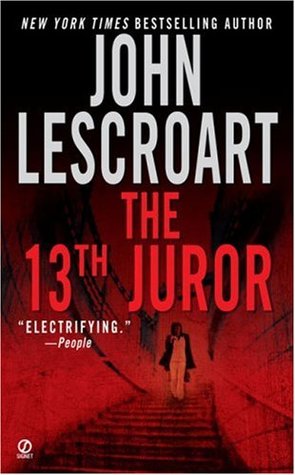
  1. The Thirteenth Juror by John Lescroart
  2. The Firm by John Grisham
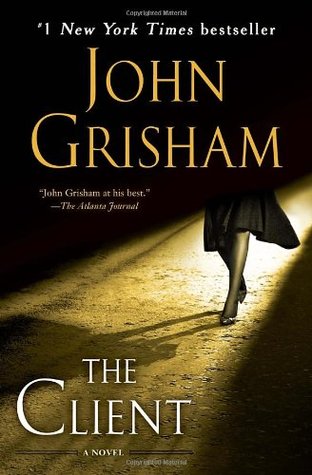
  3. The Client by John Grisham
  4. The Runaway Jury by John Grisham
The Thirteenth Juror
This is one of the Dismas Hardy books and the first novel I read belonging to this genre. Unlike most legal novels, this one provides greater coverage of the courtroom drama that is required in such novels. This is what distinguishes a legal novel from other fiction novels, and I feel, authors should try to take advantage of this. As far as this book goes, we have the protagonist Dismas Hardy defending multiple homicide charges against a wife. The prosecution claims that she has murdered her husband and her 8-year old son. This book is loaded on twists, suspense, sentiment and legal drama. When reading such books, one is usually able to root for the innocent or determine the innocent/guilty too - that is certainly not possible in this book. The reader's dilemma in this book extends right to the end and that is truly exhilarating.

The Firm
Strictly speaking, this wouldn't classify as a legal novel(most Grisham books don't, I feel), but it just has to do with a bunch of lawyers in a legal firm. This is more of a thriller/suspense and action kind of book, with some really strange happenings at the firm. A college graduate, Mitch, has offers from the top firms in New York, Chicago etc. but decides to join a small tax firm in Memphis (offers loads of cash/perks). The accidental deaths of multiple lawyers working at the firm has him unsettled and this is where things begin to heat up. Suffice to say, once you have reached this stage, you definitely won't put down the book. There is a great deal of lying, deceit, planning, killing, running etc in this book. It does seem a bit far-fetched when you are done with it, but it's entertaining nonetheless. This is a good one-time read book.

The Client
This book is about a kid who witnesses a suicide and gets caught up in a whole jungle of affairs regarding the dead man's problems. If you've heard the idiom "dead men tell no tales", it certainly does not apply here. With the kid's life at risk, and multiple parties(good and bad) wanting to talk to him about the dead man, he hires himself a lawyer with $1 (what a nice lawyer!). From here on out, it's a wonderful read. That kid is smart, very very smart. With a keen understanding of life and the people around him, the decisions he makes are simply astonishing. This is truly a remarkable read, with a little bit of legal stuff thrown in from time to time.

The Runaway Jury
Grisham aptly explains the manner in which lawyers(their advisers really) obtain information on the jury candidates, to filter them out and pick the perfect jury for their case. The book starts off with a major case for which the jury is picked and this process is covered in sufficient detail. What makes this book worthwhile - in spite of all that research into the jury candidates, among the jury members picked, there is one person who has hidden motives to swing the verdict in a particular direction. Once the lawyers get a whiff of this intent, book explodes with entertainment. This is definitely a worthwhile read. Although it's a little slow to build up and progress, the satisfaction you obtain when the secrets unfold is immense.


FYI, for all the Grisham books listed above, a movie has been released.
As for the books in this genre currently on my reading list, I don't plan on reading any more Grisham. His books don't truly qualify for the legal novel genre(they are excellent thrillers nonetheless) I enjoyed in The 13th Juror. I'll look forward to reading "To Kill a Mockingbird, by Harper Lee"(highest rated novel in this genre) and the other Dismas Hardy books by John Lescroart next.

Friday, 4 April 2014

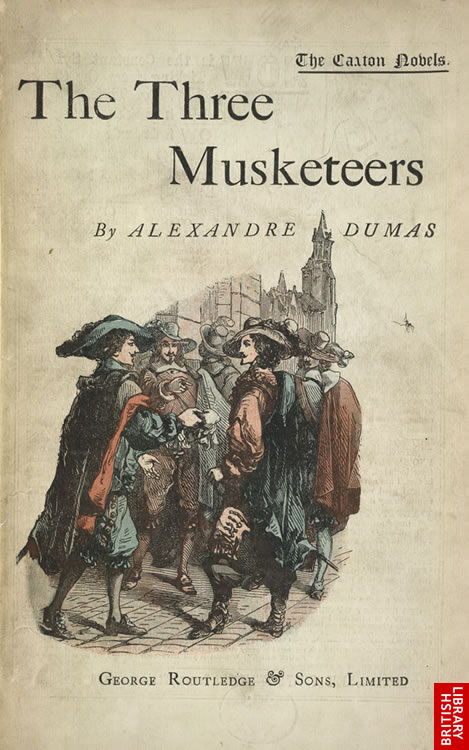
The Three Musketeers trilogy

Now who could possibly not have heard of or read "The Three Musketeers" by Alexandre Dumas! Reading this book in the school library was one of my favourite activities. So I decided to read it up once again, and to my surprise, found that it had sequels. I was compelled to write this blog after having read those sequels. In a word, they are brilliant!
The trilogy for the series is as follows:

  1. The Three Musketeers
  2. Twenty Years After
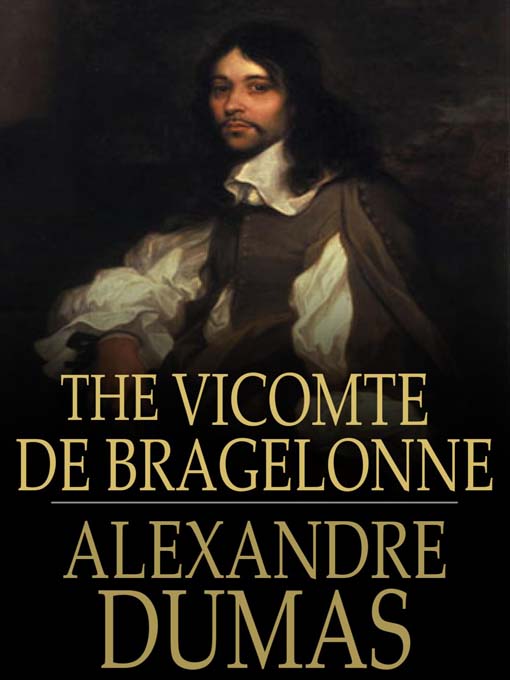
  3. The Vicomte of Bragelonne: Ten Years Later
The Three Musketeers
This book introduces us to the three famous musketeers, Athos, Porthos and Aramis. It is written from the perspective of the protagonist, D'Artagnan, who is aspiring to be a musketeer. I don't want to share any more than this since the description of the characters is really fun to read.
This book is loaded with friendship, adventure, chivalry, honour, action and timely shouts of "all for one, one for all". Rest assured, you'll be immersed in this book until you put it down.

Twenty Years After
This is a sequel to The Three Musketeers and follows the story of the musketeers 20 years after the events of the first book. This book doesn't live up to Dumas' work standards but it does well for a sequel. It acts as a good bridge between The Three Musketeers and The Vicomte of Bragelonne.

The Vicomte of Bragelonne
This is a truly a masterpiece. It is the largest book of the three, probably thrice as big as The Three Musketeers and thrice as enriching, at the very least. Dumas maintained an unusual writing style in this book, which he hadn't explored in either of the prequels, thus making it an exciting read. A good deal of the book has exploits driven by romantic needs and loyalty, and at times, a conflict between the two. We see politics, diplomacy, treachery and deceit at its fullest. This book truly is one of a kind.

It's a daunting task to read all those books at a stretch. I was tired by the time I was done with the third book. I suggest taking a break and reading some other book after completing a section or two of the final book. But, by no means, is this a trilogy that can be missed out on.

Saturday, 30 March 2013

Miscellaneous reads


Now here's a listing of a bunch of books that I found to be different from your general variety of books. Read on to find out more.


  1. The Godfather by Mario Puzo
  2. The Day of the Jackal by Frederick Forsyth
  3. Strong Medicine by Arthur Hailey
  4. The Bourne Series by Robert Ludlum


The Godfather


This book revolutionised thinking and culture in America and was Puzo's seminal piece of work which laid the foundations for future crime novels. As most would already know, Godfather here refers to the head of a Mafia family and is responsible for the welfare of that family as well as the successful running of the illegal activities carried out by the family.
The book's lead roles emphasise on respecting the family heritage, the Italian culture and a do-or-die attitude to protect one's family. What makes the book remarkable is the portrayal of the Godfather, his persona, his ability to solve the toughest situations through reasoning and dialogue and the unbelievably smart advice he gives his kids even in the face of adversity and danger. It also brings to light the nature of the world, how a democracy functions(not like we didn't know this earlier), what greed and the desire for power make people do, results of lack of anger-management, betrayal and its consequences, the love for family et al. I especially liked the devious strategies employed to thwart one's enemies and traitors. This novel is the complete works. Everything you can encounter in life is depicted somewhere in this book.

I haven't had the opportunity to read the sequel to this book though, 'The Sicilian', but it did not gather the same kind of fame that The Godfather did.

Another one of Puzo's books, The Last Don, focused less on the crime part and more on the love part. But since it also contained devious plans and strategies to get rid of enemies, it didn't fail me. Absolutely enjoyed this book too. In many ways though, this one seemed like a quick read compared to the Godfather, probably cause of the writing style and content. Some of the content in Godfather felt unnecessary at times(probably because Puzo left you on a cliffhanger in the previous chapter and took you to another character in the following chapter) but this book had a continuous link throughout. Of course, there were cliffhangers, but it seemed like it was more structured and there was continuous action in the book. All said and done, both the books are well worth reading.

Godfather description by Tom Hanks

Check out this video to see what Tom Hanks has to say about the Godfather in You've Got Mail.


The Day of the Jackal
This is the best crime/action book out there, believe me! It absolutely blew my mind off. The detailed description of every step taken by the hired assassin, right from creating fake identities to identifying the vantage point for the kill, every bit of it was remarkably done. Add to that the fact that the high profile target is already alerted about the assassination attempt! The book has two perspectives - the assassin's and the secret agency's which is trying to identify and capture the assassin before he makes the kill - and both are equally enthralling. Saving the first few chapters of the book which laid the groundwork, I can't recall any moment during the rest of the book which made me feel like I was getting bored or why the author had to put those details in the book. No regrets and no time wasted in this book.


Strong Medicine
Heads up, this book is very very different from the remaining books I have recommended so far. It is kind of
like a documentary spruced up with mystery and thrill. Let me explain. Arthur Hailey is the kind of author who provides absolutely all the information that exists on a particular topic. So when he explains about the process by which experimental drugs turn into marketable medicines, he takes you step by step through the entire process spanning the different teams, approvals and organisations involved. Needless to say, this makes up for a lot of information on drugs. Now for the mystery and thrill part. Since the drugs are made by a company, it entails making money. So, Hailey gets the opportunity to show you the manner in which conglomerates think and how the decisions are taken to make profits. This is certainly a good read, but I warn you, there will be times when you feel an information overload. Since I liked the manner in which he portrayed the wrong actions of the individuals in the company to enhance their interests, as well the information about drugs/medicines, I enjoyed the book in its entirety.


The Bourne Series
A trilogy of action books, this is a wonderfully written series with detailed instructions on how to become an assassin as well. The first book I came across which had such detailed description on steps to take to live a life of an assassin. The series consists of:

  • The Bourne Identity
  • The Bourne Supremacy
  • The Bourne Ultimatum
In the first book, the lead role Jason Bourne suffers from amnesia and is trying to fend off attempts on his life from terrorist groups, paid assassin as well as the CIA. At the same time, he is trying to recover his memory while safeguarding a woman who is stuck with him. Wow, quite a handful on his plate, even for an assassin. Ludlum pulls this off with grace and unparalleled writing skills. While reading an action scene in the book, you literally picture that happening right in front of you, every single move too, even the complicated assassination moves used in one-to-one combat.
I can't describe much about the next two books since that is bound to reveal Spoilers but to make sure you are interested in them, I can tell you this - Jason Bourne becomes the hunter in the next two books vis-a-vis the target as in first book. A trained assassin out to kill, now that's definitely a book worth reading, especially when it is written by Ludlum.

There are several other books on Bourne out in the market, but they aren't written by Robert Ludlum.

Friday, 29 March 2013

The Best of Jeffrey Archer


Jeffrey Archer has written two undeniable masterpieces, listed below as items 1 and 4. I have read several books by Archer, his collection of short stories as well as the books he wrote when he was in prison. But among all his books, these two caught my attention. For the sake of completion of the trilogy which started off with Kane and Abel, I have listed two other books which may catch your interest.


  1. Kane and Abel
  2. The Prodigal Daughter
  3. Shall We Tell the President
  4. A Prisoner of Birth

Kane and Abel
First and foremost, Kane and Abel is a must read for every single person out there. In my opinion, it is the best and yet, most simplest work by Archer. It is the first of the trilogy, which ends with item 3 in the list above.
A marvellous book revolving around two men, who were different in every manner except their day of birth and the zeal to succeed in life, it tells their stories in a gripping manner. Born on the opposite sides of the world, they are brought together by fate and a quest of a dream. To keep the readers hooked, Archer ensures that the two protagonists of the book are locked in a spiteful struggle to defeat the other and expand one's empire, thus making you, willingly or not, choose your favourite. It's a tough battle, trust me, but that makes the book a whole lot special.
This book has it all - thrill, mystery, drama, contemporary, historical fiction et al. It will take you through struggles, jealousy, hatred, love, inaccurate assumptions and misunderstandings, success and wealth, coincidences and accidents, and Life.

The Prodigal Daughter
This is the sequel to Kane and Abel. Another good book, but does not compete with its predecessor by a long shot. It depicts the struggles of Florentyna, daughter of Abel, as she sets the highest target for herself and strives to achieve it. This book depicts the difficulties faced by a working mother, how she tries to balance life and work and cope with the problems faced by her family while juggling the her business.
I found the book to be very drawn out, almost as if Archer wanted to meet some total page count requirement. It includes quite a bit of information on the political system and a great deal of historical fiction as well, since Archer used a lot of history and tied in actual names and historical occurrences within the fictional story.

Shall We Tell the President
This is a weird one. It was actually released before the above two books, with Ted Kennedy as the main role. But due to the success of the above two books in the years, it was rewritten and the main role was changed to include a character from the previous book to play as the main role instead.
This one, I haven't read yet, but since it was made a part of the trilogy, I doubt anyone would let it pass after completing the first two books. I don't have high hopes from this one though since it was added to the trilogy only due to the success of the first two books.

Truth be told, I would strongly recommend Kane and Abel only, in this trilogy. Having read The Prodigal Daughter, I wouldn't rule it out as a good read, but going from Kane and Abel to The Prodigal Daughter is a big disappointment.

A Prisoner of Birth
This is one of my favourites as well. You must know that I am huge fan of courtroom drama-mystery-thriller books. This one had them all, in a perfect mix too. I can recollect the book lucidly as I write this, it's a great book.
It is like reading The Count of Monte Cristo by Alexandre Dumas, but with the events happening in the 20th century context. The initial half of the book is spent in depicting the event concerning the plot of the book and the legal discourse associated with it, while the later half is spent on planning and exacting revenge on the culprits (not exactly halves, but you get the picture...if you don't, read the book).
Aside from some very lucky coincidences happening to the protagonist, this book has no flaws and is a page-turner.

A list of other books from Archer that I plan on reading are:
  • Not a Penny More, Not a Penny Less
  • As the Crow Flies
  • The Clifton Chronicles books
Some of his other books are either very similar in plot to the books listed above or are of the political drama genre and those tend to get too boring at times.

Happy Reading!

Monday, 18 March 2013

Why you must read "The Hitchhiker's Guide to the Galaxy" by Douglas Adams

I have always enjoyed a book that can make me laugh, and Douglas Adams managed to come up with four of those. For some reason, British authors are exceptional at hypnotizing the reader through their books. Whether it be Adams with his satirical comedy or Wodehouse with his depiction of situation comedy in the most lucid manner or Rowling with instances of humour tied in with fantasy in an interesting mixture, they all managed to keep the reader happy and hooked.

Coming back to The Hitchhiker's Guide to the Galaxy by Douglas Adams, it is a 5-part book, based on a radio comedy show run in 1978 on BBC radio.
The books in this series, in chronological order are:


  1. The Hitchhiker's Guide to the Galaxy
  2. The Restaurant at the End of the Universe
  3. Life, the Universe and Everything
  4. So Long, and Thanks for All the Fish
  5. Mostly Harmless
  6. And Another Thing...(by Eoin Coffer)


Why you should read these books:

Douglas Adams had a very unique style of writing, in my opinion. I haven't encountered this in any other book yet. The humor in his books aptly falls in the category of Gallows Humor, which is basically witticism in the face of a hopeless situation, laughter in the face of death. It is generally written with respect to the victim, which makes it all the more interesting to read. Someone at the gallows is being mocked or is mocking himself, surely that can crack one up. Top that with Adams' writing skills and you have a winner here.

Unlike most other books, you cannot predict any event in Adams' trilogy with certainty. Adams managed to introduce a concept of Improbability in the book, by means of which, by far the most improbable events that can occur in the universe, occur at the most improbable moments, and this happens quite often too. This gives a whole new dimension to the book, making it highly unpredictable and hilarious too(some of those improbable events are bound to crack you up while some will make you wonder about the cause of occurrence of the event only to find that none exists).

These books would fall in the fantasy comedy genre in my opinion, so if you like either fantasy or comedy, you definitely shouldn't miss out on them.

There are a bunch of really crazy ideas/concepts pitched in these books, regarding towels, restaurants, cricket, flying, Earth, ultimate answer to life and so on. The list is truly endless. Oh and yes, you definitely do not want to miss out on meeting the robot, Marvin.


If you do go ahead and take my advice on reading these books, forgive me if you do not like the third book. For some reason, it simply did no click with the world or with me. It did not have the same kinda charm that the other books did. At the time of writing this blog, I was halfway through the fourth book and recovering from the sudden downturn that the third book had taken.
There was a sixth book that was released by Eoin Coffer, named And Another Thing..., based on what Adams was planning for the sixth book but couldn't write due to his untimely demise aged 49 due to a heart attack. He wanted to end the series on a high note of some kind, which was what Eoin Coffer tried to do. This book didn't really do so well and is not part of the Douglas Adams collection, hence left it out here. Although, it seems to have brought a fitting ending to the "trilogy". Considering that each of these books does not have more than 300 pages, you might as well give it a try, at least for the sake of completing the collection and experiencing the ending that Adams wanted for the series.


Spoilers ahead! This is the end of the post for those who haven't read the books yet

For those of you who might have already read these books, this section would probably shed some more light on this inaccurately named "trilogy", although I doubt you wouldn't have done the research already :)

In the first book, Adams mentions that 42 is the ultimate answer to life. When asked about 42, Adams said that the number just struck him when he was staring out into his garden and he thought 42 sounded good. Typical of him I suppose :). In fact, Douglas Adams gave a whole new meaning to the number 42, almost redefined it. The following two articles should suffice, there is far too much material out there to read on this!